excessiveness : Marcelo Guarnieri Gallery, São Paulo — Brazil (2024).


the monster
to Victor Mattina
I (the dimension)
bone pile, inhospitable landscape
that welcomes us, the hand of strangeness
strikes midnight in our consciousness and
six canvases recite, in the echo of their creation,
a great verse of exile.
pictorial summons, a desire
too unfamiliar to belong to that
limbo before the image:
like death,
Rilke's angel
and art
compress time
—this is excessiveness.
II (the correspondence)
in itself, the beast embraces:
the dilemma of the canvas is proposed
(and resolved) in shades
of green and earth, composing
its interrogation as it advances.
we who stand before it,
in the anguish of the phenomenon,
waiting for a joyful passion,
dissolved in the indecipherable.
the body of paint longs for another total
and we are trapped in this dimension:
that of doubt, that of promised presence,
with fear in the hand of the frame.
in its cloak of perjury,
before us,
the monster is the one that never sleeps,
but continues in peace and, vigilant,
with its addiction to the pounce.
III (the making)
the monster is a flaw,
and the flaw lies in the judgment of our autarchy.
a normative sense of what neglects
excess, of what remains and persists.
(Like the winged bull on an angel's wing:
there is no reason, but there is nowhere to go.)
and the monster is a short circuit,
generative breakdown, dysfunctional hunger,
verbal disconnections that still speak,
animal roar, algorithmic ulcer,
mouth-all-teeth:
self-portrait as devourer of art advisor
rage-in-every-eye
prodigal son of our contradictions,
he replenishes himself in what we deny him:
he overpowers his size
by responding to commands
that most resemble us
—the monster masters the mirror.
IV (the tecnique)
stuck course of a pebble,
projection axis that does not shelter,
reminiscences of foliage
that endorse us a forest in ruins,
but the fire is cold. only the eye burns.
the soul tells of a temple
where the dead riot.
a banquet set for a solitude of skulls
in scenes of terror that glisten gold:
who polished them?
helplessness of a delirious knight,
a gesture adjusted to misrule and
elegance to the abstract explosion of blue,
to have in its color
crisis and observation.
V (the palette)
earth tones,
Florence school
before the projector,
whisper of details
and fine brushes,
moving effort,
fluid registration,
which in the conviviality of the stain
measures the pulse.
VI (the scale)
let's see that it's about painting,
about craftsmanship, oil moss
on raw cotton, Lukas paints,
disordered MidJourney,
hands from South America.
painting of indexes, without secrecy,
polysemy of exaggerations
in Plato's cave.
it is us,
entangled in this reverse,
lost in this labyrinth of Daedalus
that we give names to.
Trapped by our specters,
we can only fear the ghosts
that watch us:
Every fire is Al-Shati,
every grave has been prophetic.
the screen is this game
in the gloomy scene,
the colorful physiognomy
of our helplessness,
and the monster,
delegated to us,
supposes its dark face,
in what most assumes
its vocation as a frontier.
— Flávio Morgado (August 2024)
[-] exhibition views: (pictures by Gabriel Martins and Rafael Salim).
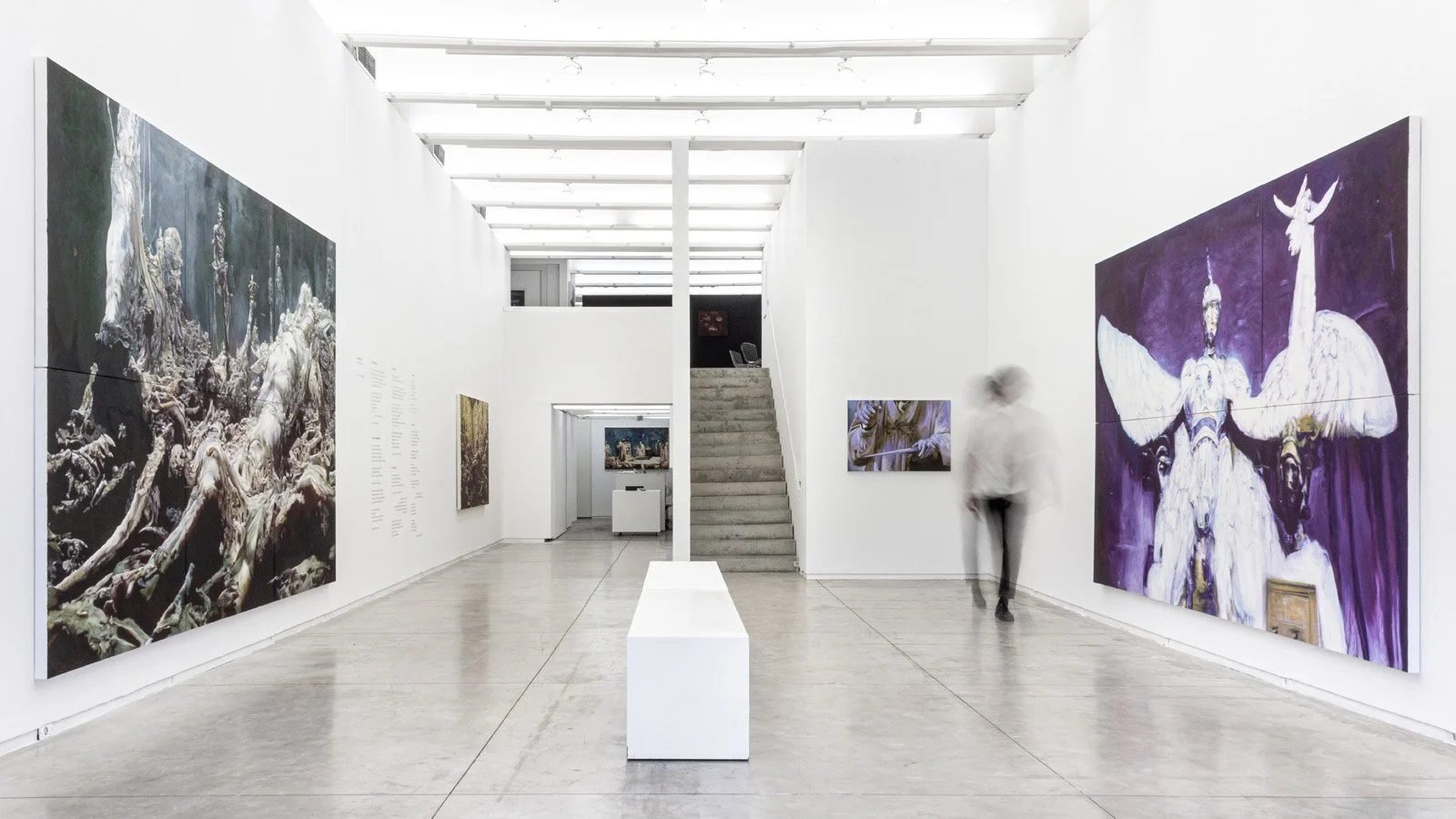
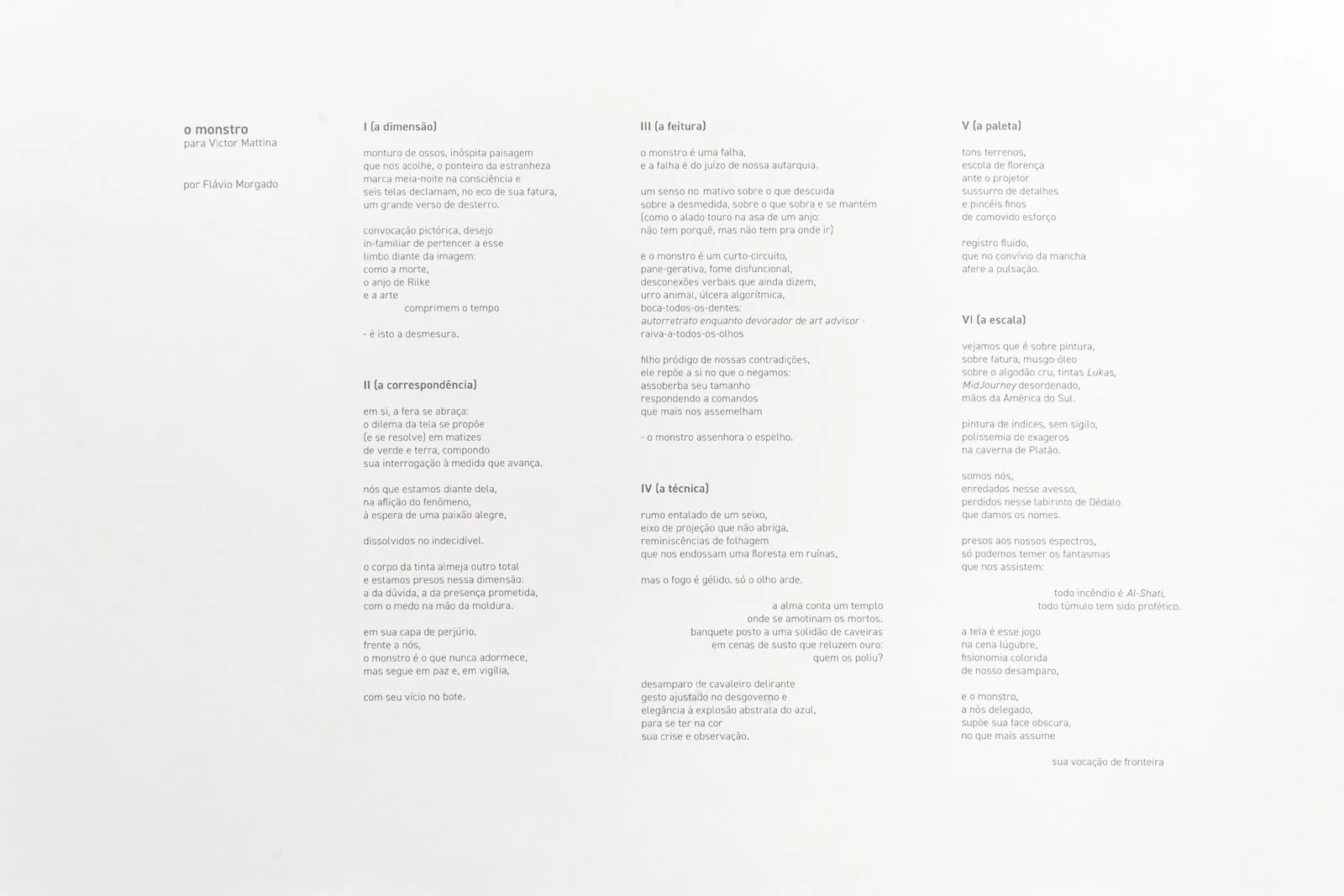
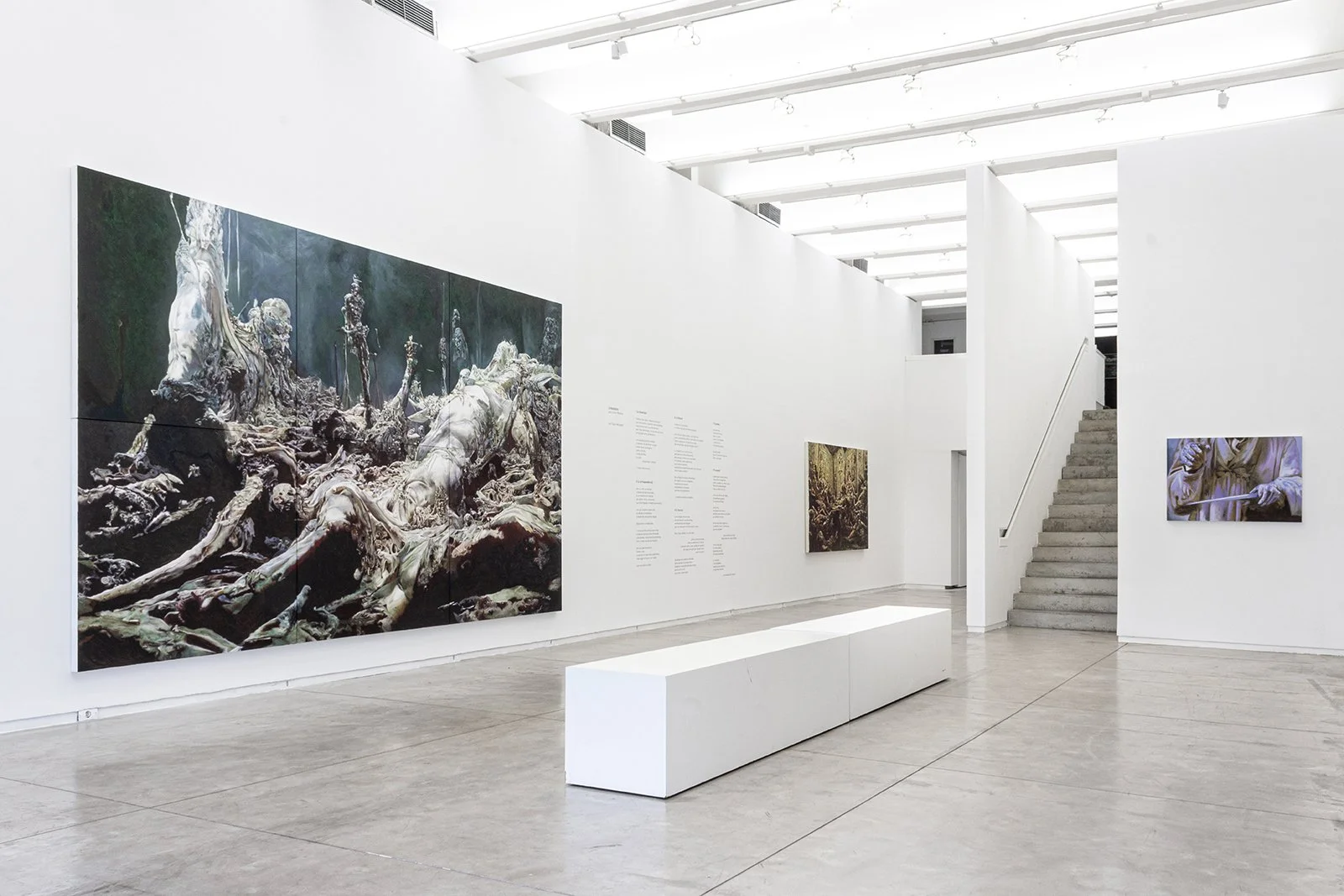

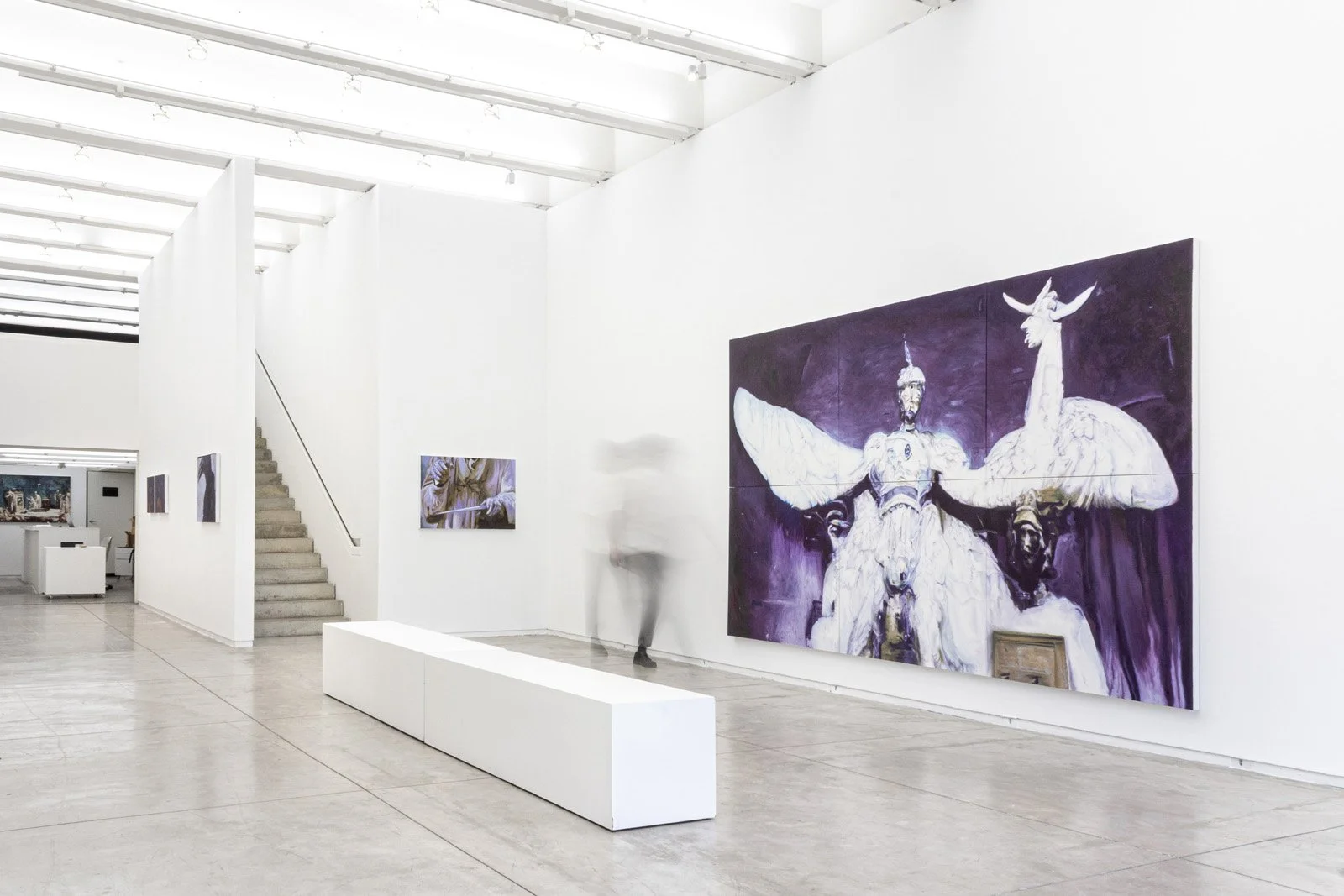
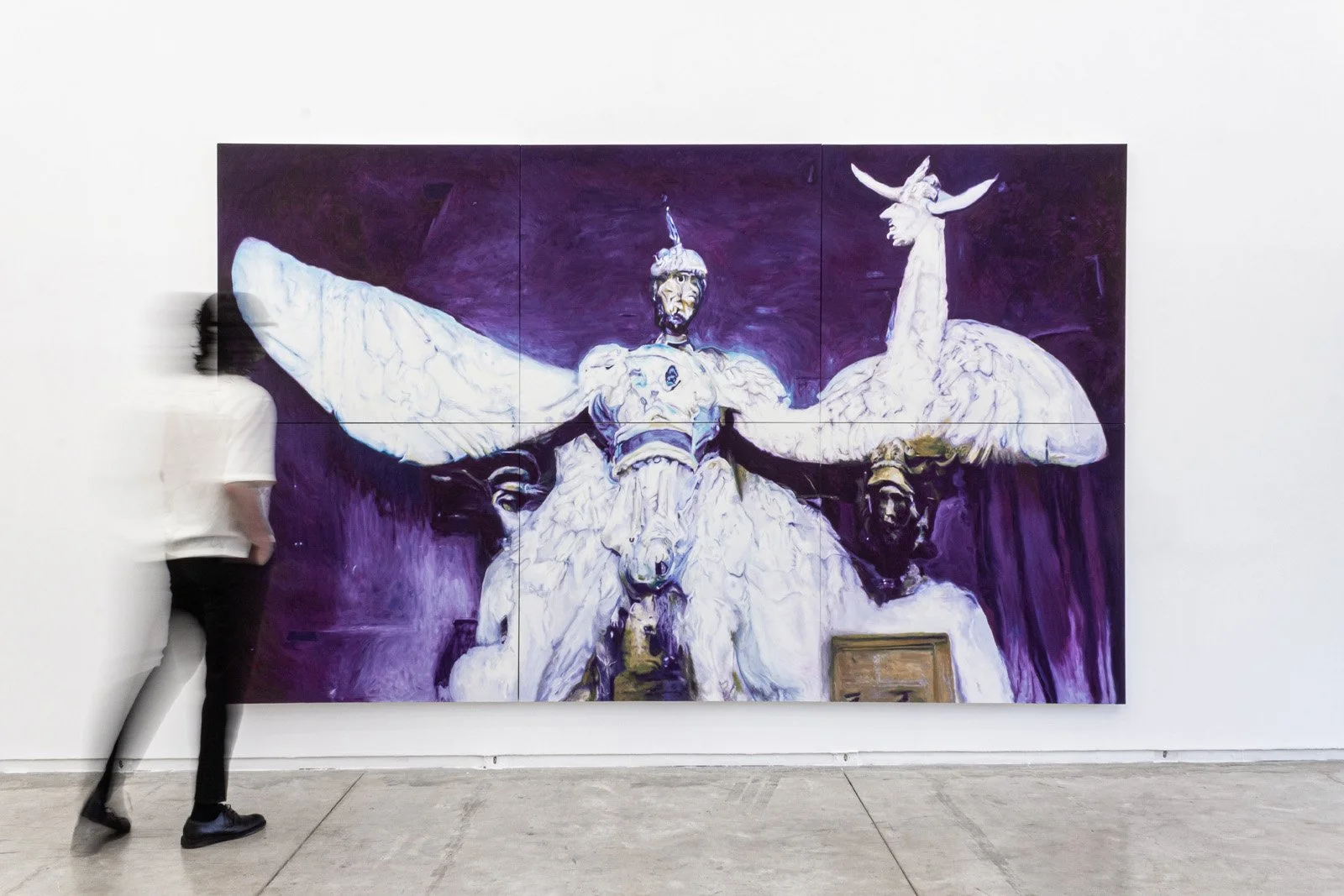
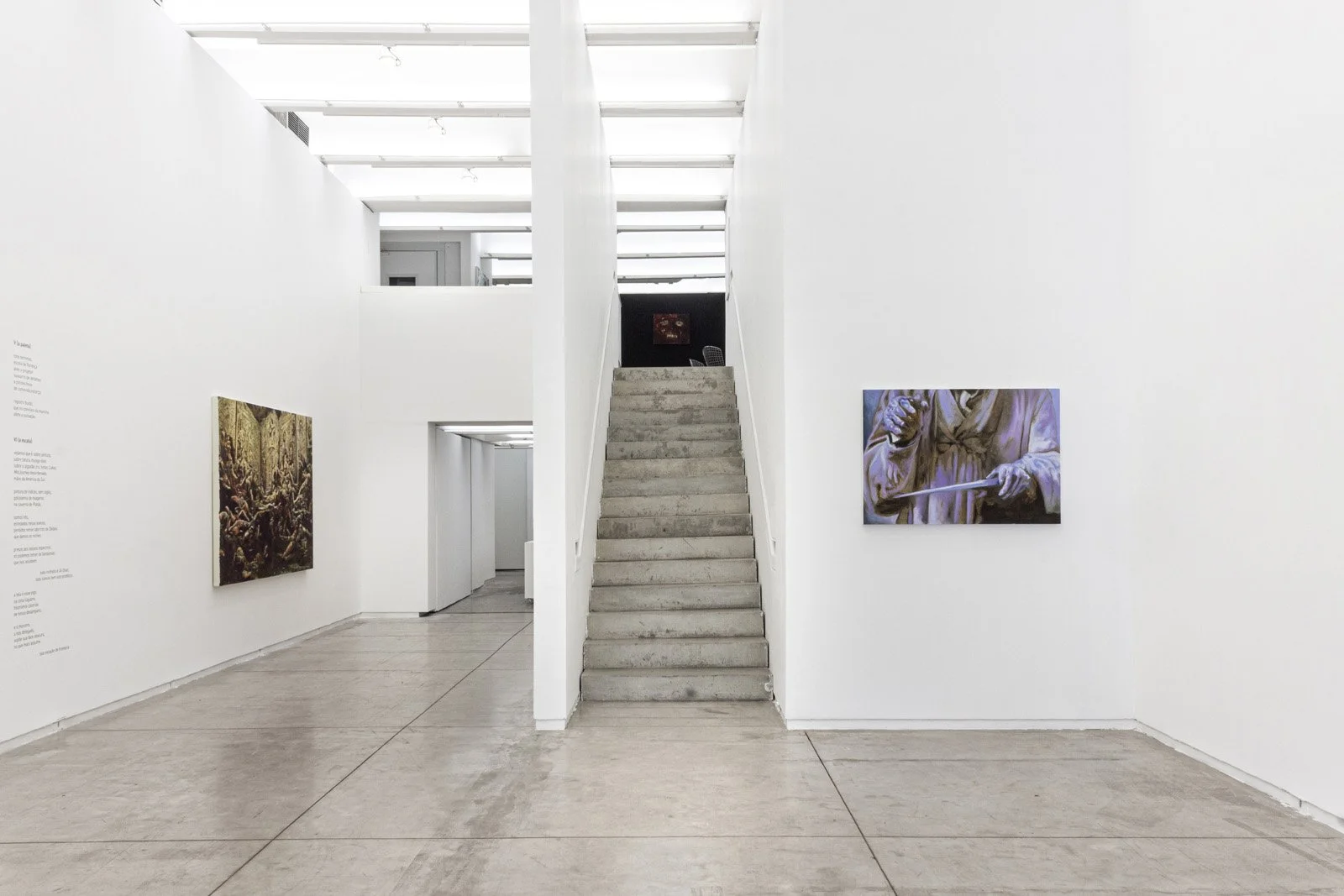
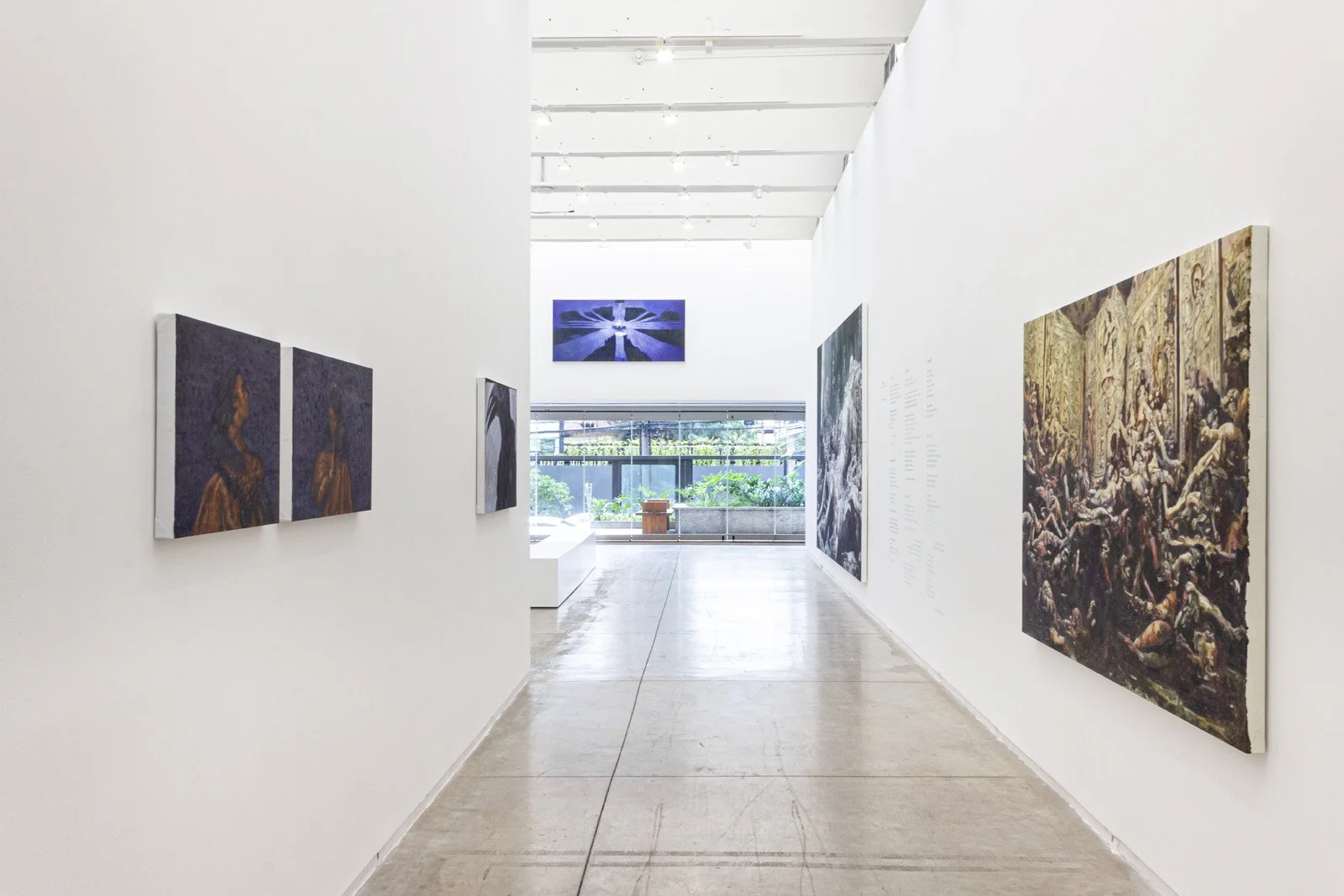
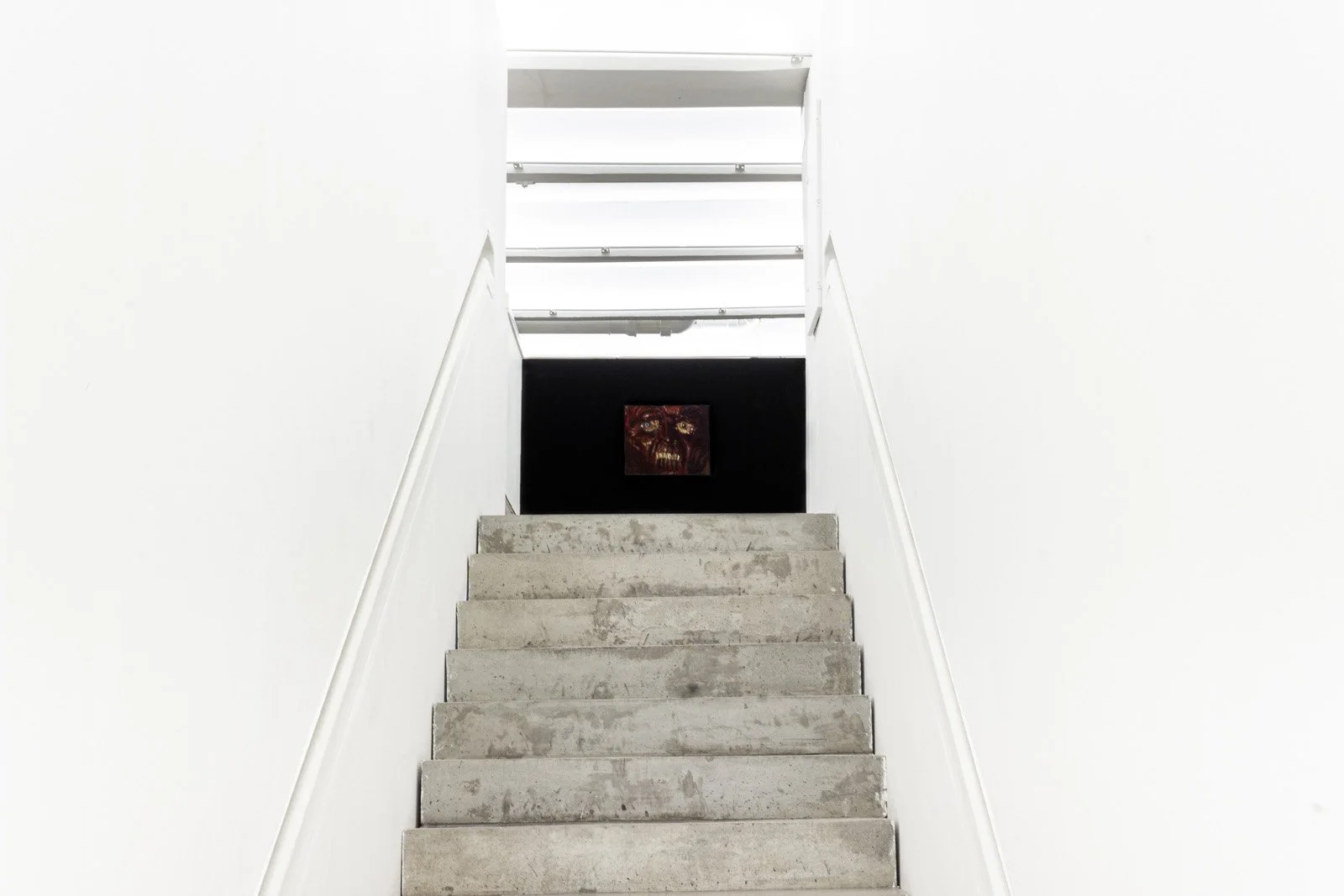
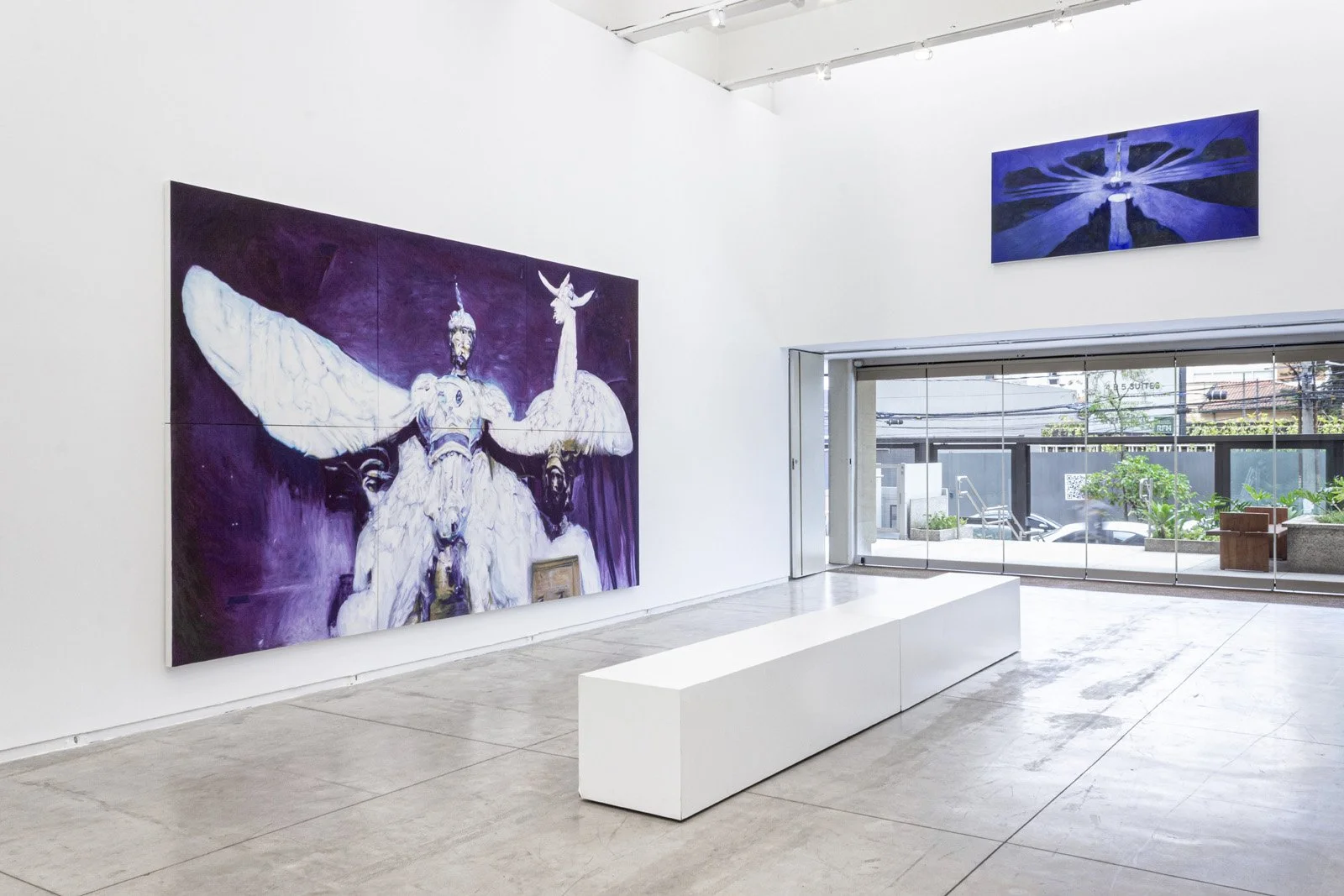
[-] the monster written by poet Flávio Morgado especially for the solo exhibition “excessiveness” at Galeria Marcelo Guarnieri (São Paulo, SP. October 2024).
[-] Conversation* recorded between poet Flávio Morgado, actor and researcher on Greek mythology Rodrigo Lopéz and Victor Mattina at Marcelo Guarnieri Gallery (São Paulo, November 2024).
*translated transcript pending
[Release]
The Marcelo Guarnieri Gallery is pleased to present, between October 4 and November 8, 2024, “desmesura” (excessiveness), Victor Mattina's second solo exhibition at our São Paulo location. The exhibition, which brings together ten new paintings and a diptych, is accompanied by the poem “O Monstro” (The Monster) by Flávio Morgado.
In “excessiveness,” Mattina explores, through painting, the quality of monstrous representation and the condition of freedom under which the figure of the monster resides. His compositions are constructed from fragmented visions, silhouettes, stains, anthropomorphic creatures, and unlikely associations, as if we were facing a world that, although guided by the same symbols that make up our own, operated under a different logic. It is on this threshold between the recognizable and the absurd that Mattina's paintings are sustained, and it is in this impossibility of categorizing his figures, as in “Capital dawns under a new sun,” or his strange encounters, as in “Mass for cathode rays,” that the artist sees a potential emancipation of the image. Although his practice is based on figurative painting, Victor Mattina does not use it as a tool for transparent representation. On the contrary, it is his mastery of technique that allows him to bring figuration closer to the implausible. "In ‘Arteriograma de Ka’ there is a somewhat baroque scene with bodies piled up in the foreground, in front of a kind of temple. It is a painting of indexes, alluding to an idea of antiquity without ever saying where and when."
The poem “O Monstro” (The Monster) by Flávio Morgado, which accompanies the exhibition, is divided into six parts, in dialogue with the montage of “Elegia I” and “Elegia II,” paintings that are over 4 meters long each, also divided into six parts. The poem covers some aspects of Mattina's paintings – The dimension, The correspondence, The making, The technique, The scale, The palette – structural aspects that would point to a more categorical analysis of the work, but which, through poetic language, free themselves from definitives, overflowing their limits. In “excessiveness,” text and image recognize each other through their refusal to perform the functions they should in a normative world. Together, they create a kind of visual limbo. As Morgado writes in the first part of the poem: “pile of bones, inhospitable landscape / that welcomes us, the hand of strangeness / marks midnight in consciousness and / six canvases recite, in the echo of their making, / a great verse of exile.”
In dialogue with Victor Mattina's exhibition, a collection of works by Marcello Grassmann (1925-2013), Oswaldo Goeldi (1895-1961), Guima (1927-1993), and Iberê Camargo (1914-1994), Brazilian artists who, through engraving and painting, also explored the monstrous dimension of figurative representation.